
On many spinning disk confocal microscopes, the laser illuminates a sample area larger than the FOV of the camera, and there is no variable field diaphragm to stop down the light to within the FOV so the area of illumination can be calculated. As the light path is mostly inaccessible in these commercial instruments, it is difficult to insert your own diaphragm in an appropriate position.
In this situation it may be possible to position a precision pinhole of the appropriate size in the sample plane on stage. The pinhole should be as thin as possible to minimize power loss, yet resistant to localized heating and warping. Molybdenum pinholes are suitable.
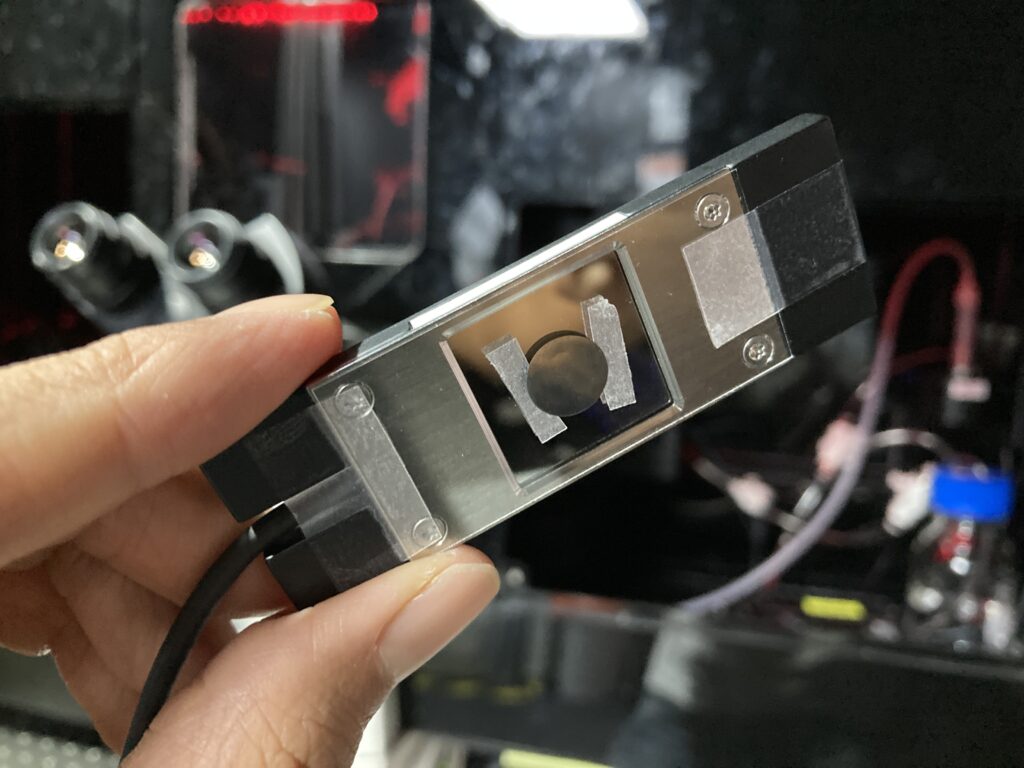
The power sensor should be large enough and positioned close enough to the pinhole to capture all the light from the objective. You can calculate the diameter of the beam that hits the active surface of the sensor using the equation for objective numerical aperture and the distance of the pinhole from the active surface which may be below the physical surface. If necessary refer to the sensor manufacturer’s CAD drawing.