
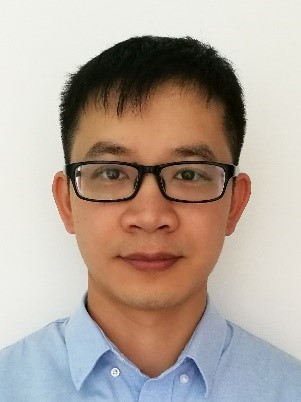
LIN Zhewang
Assistant Professor
NUS Presidential Young Professorship (PYP)
Department of Biological Sciences
National University of Singapore
14 Science Drive 4
Singapore 117543
Academic Qualifications and Experiences
2021-Pres. Assistant Professor, National University of Singapore
2019-2021 Research Fellow, Institute of Molecular and Cell Biology, Singapore
2016-2019 Postdoctoral Fellow, MRC Laboratory of Molecular Biology, UK
2011-2016 Ph.D. Cornell University, USA
2010-2011 Research Officer, Institute of Bioengineering and Nanotechnology, Singapore
2007-2010 B.A. University of Cambridge, UK
Research Areas
Protein translation regulation, Chemical Biology, Molecular and Cell Biology
Research Interests
The accurate and timely production of functional proteins is critically important for cellular activities. Thus, cells have evolved an extensive molecular network to monitor both the quality and quantity of newly synthesized proteins. In particular, the co-translational surveillance of newly synthesized proteins at the ribosome is the earliest point for the cell to assist protein maturation and perform quality control. Our group integrates chemical, biochemical and cell biology approaches to discover and understand novel co-translational pathways that regulate the fate of newly synthesized proteins and their associated mRNAs. Such co-translational molecular network is an emerging and under-examined area of research in a wide range of diseases, including infectious diseases, neurodegenerative disorders and cancers. We aim to capture, identify and characterize the co-translational factors directly involved in these disease processes.
Awards
2021 NUS Presidential Young Professorship (PYP)
2017–2020 Human Frontier Science Program Long-Term Fellowship
2016–2017 EMBO Postdoctoral Fellowship
2007–2016 National Science Scholarship, Singapore
2016 Tunis Wentink Prize, Cornell University
2009-2010 Foundation Scholarship, Jesus College, University of Cambridge
2009 Duncan McKie Prize for Natural Science, Jesus College, University of Cambridge
Selected Publications
-
Xiong, W., Ser, Z., Sobota, R.M., Lin, Z.*(2026) Global profiling of nascent chain interactors reveals TRIM25 as a co-translational E3 ubiquitin ligase. Mol Cell.1016/j.molcel.2026.02.007
-
Batiuk, A., Hopfler, M., Almeida, A.C., Teoh En-Jie, D., Vadas, O., Vartholomaiou, E., Hegde, R.S., Lin, Z.*, and Gasic, I.* (2024). Soluble alphabeta-tubulins reversibly sequester TTC5 to regulate tubulin mRNA decay. Nat Commun. 10.1038/s41467-024-54036-0.
-
Li, J., and Lin, Z.* (2024). An integrated approach using proximity labelling and chemical crosslinking to probe in situ host-virus protein-protein interactions. QRB Discovery. e11. 10.1017/qrd.2024.19.
-
Lin, Z., Gasic, I., Chandrasekaran, V., Peters, N., Shao, S., Mitchison, T.J., and Hegde, R.S.* (2020). TTC5 mediates autoregulation of tubulin via mRNA degradation. Science1126/science.aaz4352.
-
Lin, Z., Dong, M., Zhang, Y., Lee, E.A., and Lin, H.* (2016). Cbr1 is a Dph3 reductase required for the tRNA wobble uridine modification. Nat Chem Biol1038/nchembio.2190.
-
Lin, Z., Su, X., Chen, W., Ci, B., Zhang, S., and Lin, H.* (2014). Dph7 catalyzes a previously unknown demethylation step in diphthamide biosynthesis. J Am Chem Soc. 1021/ja5009272.