

Current Members
Research Fellows
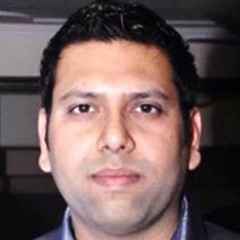
Kamal Kant Sharma
Research fellow: University of Strasbourg (UDS), Strasbourg, FRANCE; from 10/12 till
03/16
Research fellow: Case Western Reserve University, Cleveland, Ohio, USA; from 05/11 till
09/12
Ph.D., (Biophysics): University of Strasbourg (UDS), Strasbourg, FRANCE
M.Sc., (NanoScience): Amity University (AINT) (India)
B.Sc., (Life Sciences): Delhi University (India)
Research Interests
Revealing molecular events of the Dengue Virus during its infection process, its effect on the host cell, and its replication mechanisms by using Fluorescence spectroscopy and imaging techniques
Dengue Virus (DENV) is an enveloped RNA Virus that contains a 11 kb positive sense RNA as its genome and belongs to the family Flaviviridae. Despite its high clinical impact, little is known about the infectious cell entry/exit pathway. Recently, using live cell imaging techniques it has been shown that DENV particles are delivered to pre-existing clathrin-coated pits by diffusion along the cell surface. Consequently, due to membrane fusion with late endosomes, its viral content is released into the cytoplasm of host cell. Although earlier studies provide ample insight into the viral cell entry/exit mechanisms still the associated changes at molecular level within virus and the host cell are missing. I am interested in joining such missing links. To obtain this, different biophysical, bioimaging and biochemical techniques, like single molecule FRET, confocal FCCS, imaging FCS, anisotropy and time-resolved spectroscopy, will be used.
email: dbskks@nus.edu.sg

Cathleen Teh
Research Interests
Dr Cathleen Teh's completed her undergraduate and post-graduate studies in
National University of Singapore. Her research interests include generating novel transgenic
zebrafish to track physiological function by live imaging and developing zebrafish based
strategies to assess nanomaterial function and their potential biomedical application in
vivo.
Records of research activities from Google Scholar- Cathleen Teh (updated on 27th May 2020)
Total publications: 62
Total citations: 2628
H-index: 22
I10-index: 35
ResearchGate profile: https://www.researchgate.net/profile/Cathleen_Teh
email: dbstc@nus.edu.sg

Shiwen ZHU
Ph.D (Computation and Systems Biology): Nanyang Technological University, Singapore
B.S. : Peking University, China
Research Interests
Investigation of Anti-microbial mechanism through Fluorescence Correlation Spectroscopy.
email: dbssz@nus.edu.sg

Anurag Chaudhury
Ph.D., (Biophysics): Indian Institute of Science, Bengaluru, IndiaM.tech., (NanoScience and Technology): Indian Institute of Technology, Patna, India
B.tech., (Electrical Engineering). National Institute of Technology, Silchar, India
Research Interests
Studying membrane biophysics using SPIM-FCS
Membrane Biophysics is my field of interest. I am currently involved in understanding the structure and dynamics of the cortical microtubule stabilizing complex in the cytoskeleton. This requires the need to probe the complex in 3 dimensions with a good signal-to-noise (SNR) ratio using fluorescence microscopy. My work involves the development of selective plane illumination microscopy (SPIM) with improved SNR, which allows the imaging of various slices of the membrane. SPIM, along with other microscopy techniques, will facilitate probing the spatiotemporal map of the CMSC and understanding the interconnections amongst the various components, using Imaging FCS as a tool.
email: anurag24@nus.edu.sg
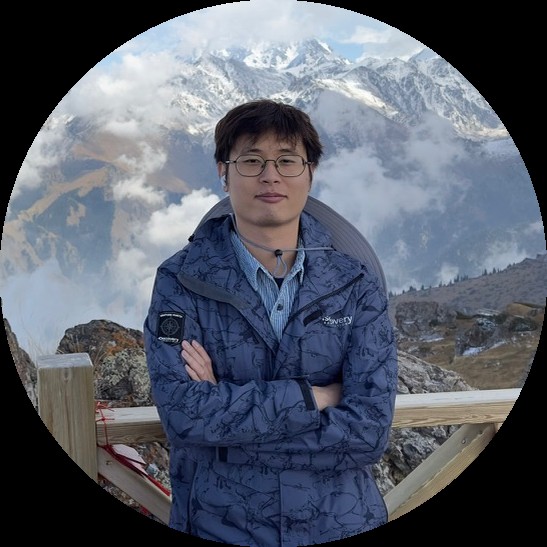
Yongyu Zhang
Ph.D. (Analytical chemistry): Tsinghua University, Beijing, China B.S. (Polymer science and engineering): Sichuan University, Chengdu, China
Research Interests
Development of self-supervised learning methods for FCS imaging to investigate complex biophysical systems at the single-molecule level.
email: yy-zhang20@nus.edu.sg
Ph. D students
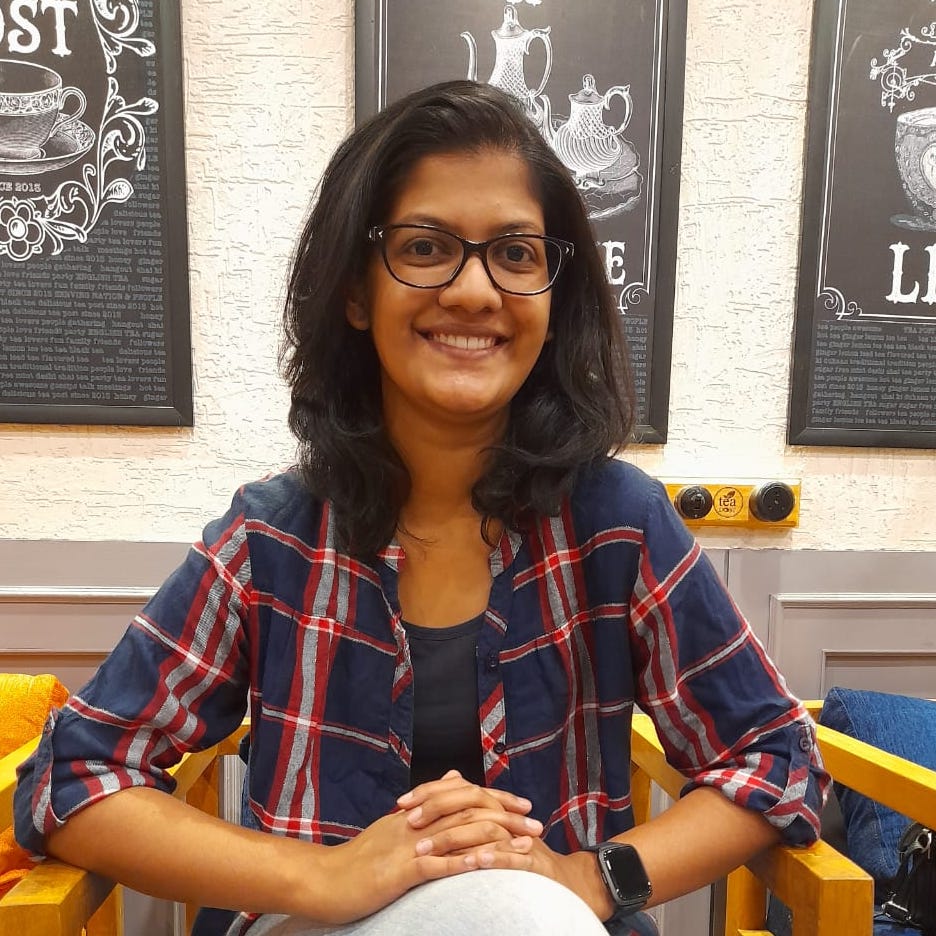
Rutuparna Kulkarni
M.Sc. (DBT-GoI supported) in Biotechnology Institute of Advanced Research & University for Innovation Gandhinagar, India
B.Sc. (Biotechnology) Savitribai Phule Pune University, Pune, India
Research Interests
Characterization of molecular transport across biofilms using single molecule spectroscopy and microscopy.
email: rutuparna.kulkarni@u.nus.edu

Sim Shao Ren
M.Sc. (Biological sciences) National University of Singapore, Singapore
BSc. (Physics) University of Malaya, Malaysia
Research Interests
Deep learning as an alternative analysis framework for data analysis in bioimaging.
email: shaoren.sim@u.nus.edu

Wang Zijie
M.Sc. South China University of Technology (Optics), China
B.Sc. Shantou University (opto-electronic science and engineering), China
Research Interests
Development of imaging fluorescence correlation spectroscopy methods for the investigation of biological interactions with single-molecule sensitivity
email: wangzijie@u.nus.edu

Shiyue Zhou
Bachelor Of Science (Veterinary Medicine) Huazhong Agricultural University
Research Interests
Spatiotemporal analysis of interactions between cytoskeleton and integrin adhesions
email: E1353394@u.nus.edu
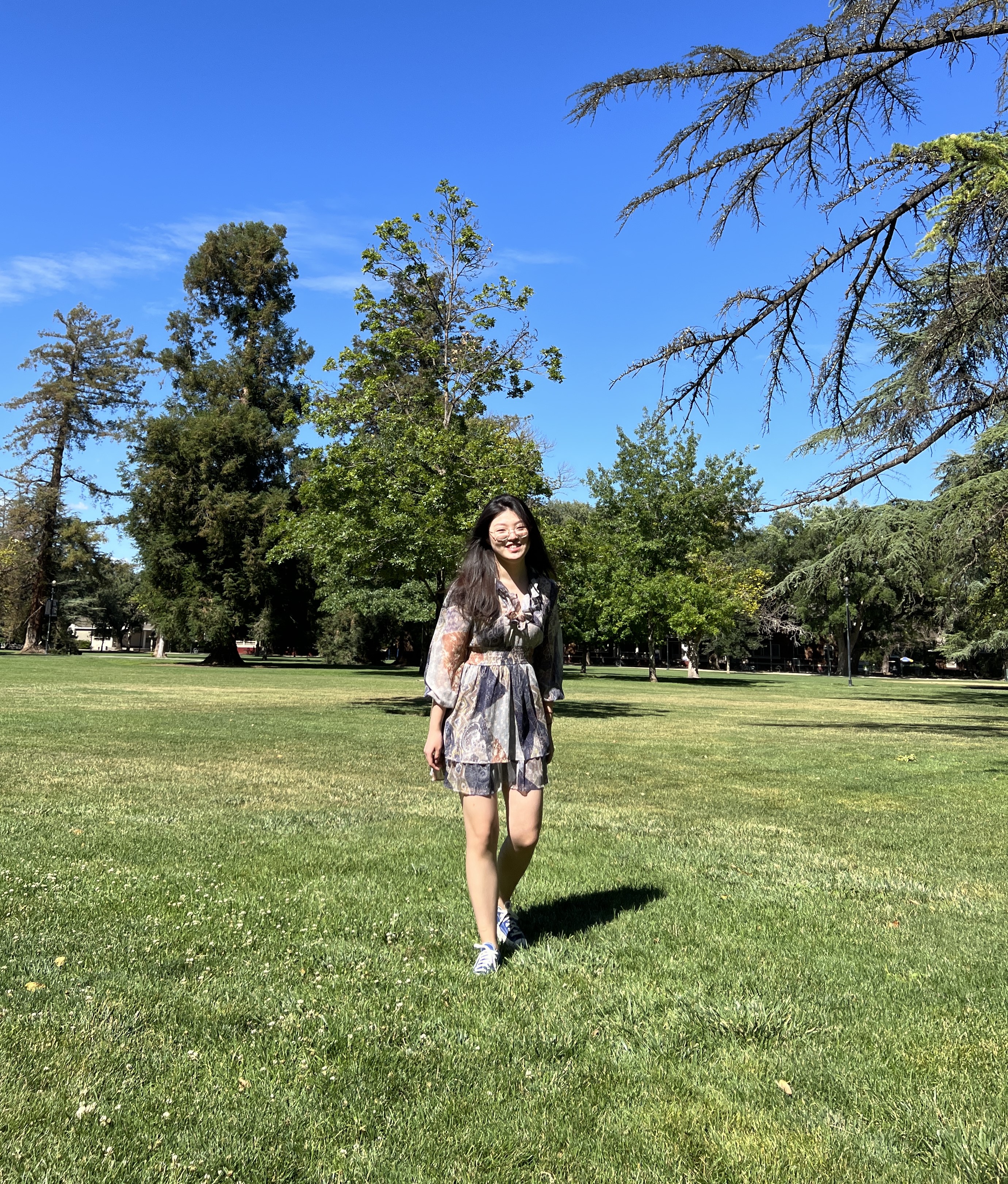
Li Yushan
M.Sc. (Biotechnology), National University of Singapore, Singapore
B.S. (Biological Sciences), B.A. (Psychology), University of California, Davis, USA
Research Interests
Spatiotemporal studies of lipid and protein dynamics and organization in the cell plasma membrane.
email: e1124505@u.nus.edu

Harshita Rani Patnaik
Integrated BS-MS (Biology) Indian Institute of Science Education and Research, Pune, India
Research Interests
Molecular dynamics simulations of cellular membranes.
email: e1583373@u.nus.edu