
Exploring the Hidden Fungal Communities That Support Coral Health
What role do fungi play in the health and resilience of coral reefs? For Ng Ming Sheng, a PhD student mentored by Assistant Professor Ying Chang from the Department of Biological Sciences, this question lies at the heart of his research into the little-known fungal communities living within corals.
At the 20th International Symposium on Microbial Ecology (ISME 20), held from 16 to 21 August 2026, Ming Sheng presented a poster on his research titled “Corals Select and Structure Distinct and Diverse Fungal Communities Across Tissues and Skeletons”. His study examined the fungal communities inhabiting the tissues and skeletons of three coral species from Singapore, providing new insights into a largely overlooked component of coral reef ecosystems.
Using DNA metabarcoding, Ming Sheng discovered an unexpectedly diverse array of fungi associated with corals, including many that could not yet be identified. The findings highlight how much fungal diversity remains to be explored and understood in marine environments.
Importantly, his research showed that fungal communities living within corals were markedly different from those found in the surrounding seawater and sediments. Further analyses suggested that corals actively shape and maintain particular fungal communities rather than simply hosting them passively. Many of the fungi selected by corals, particularly yeasts, are known to produce compounds that may benefit their hosts, while fungi associated with disease in other organisms were often suppressed.
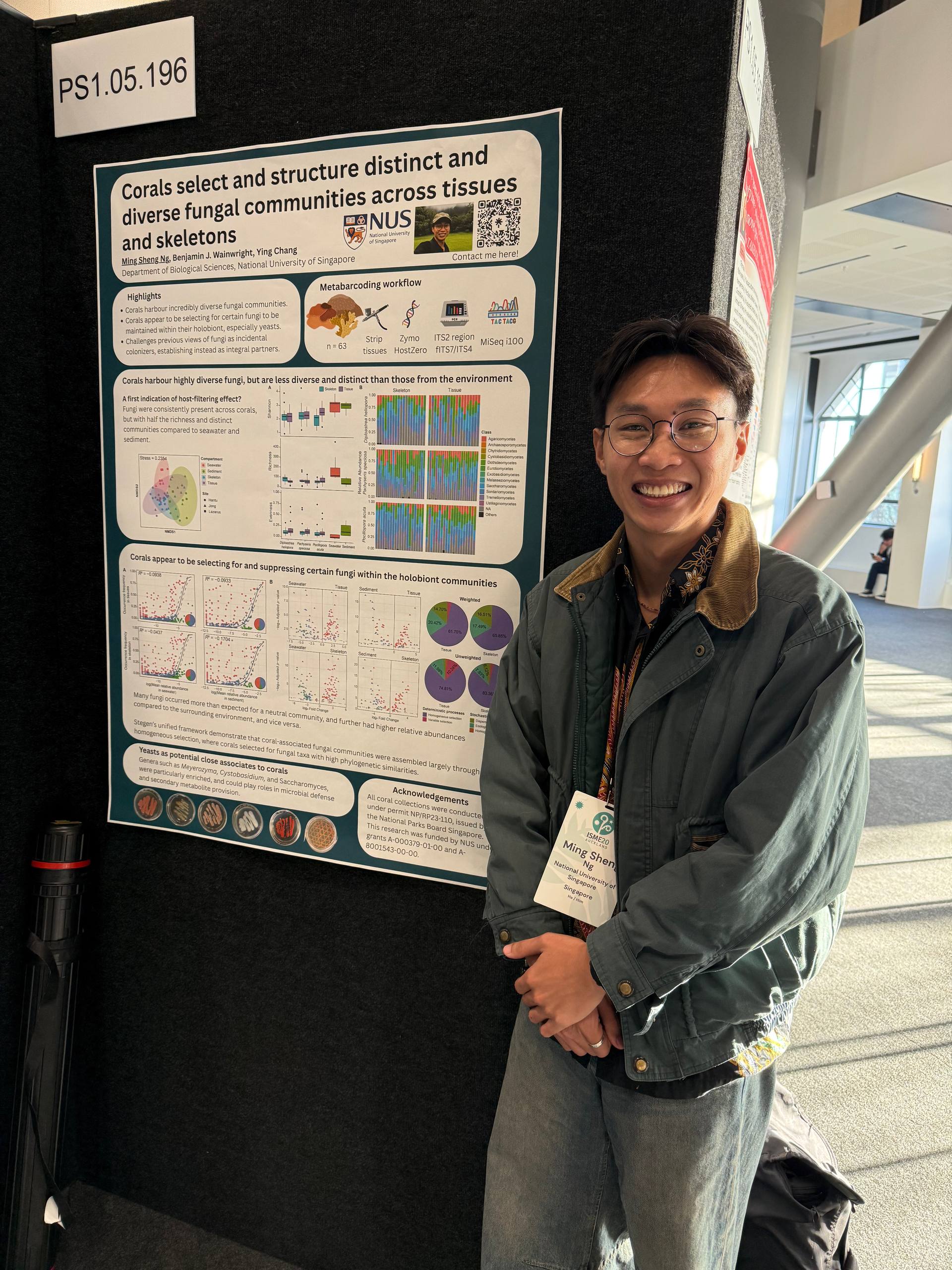
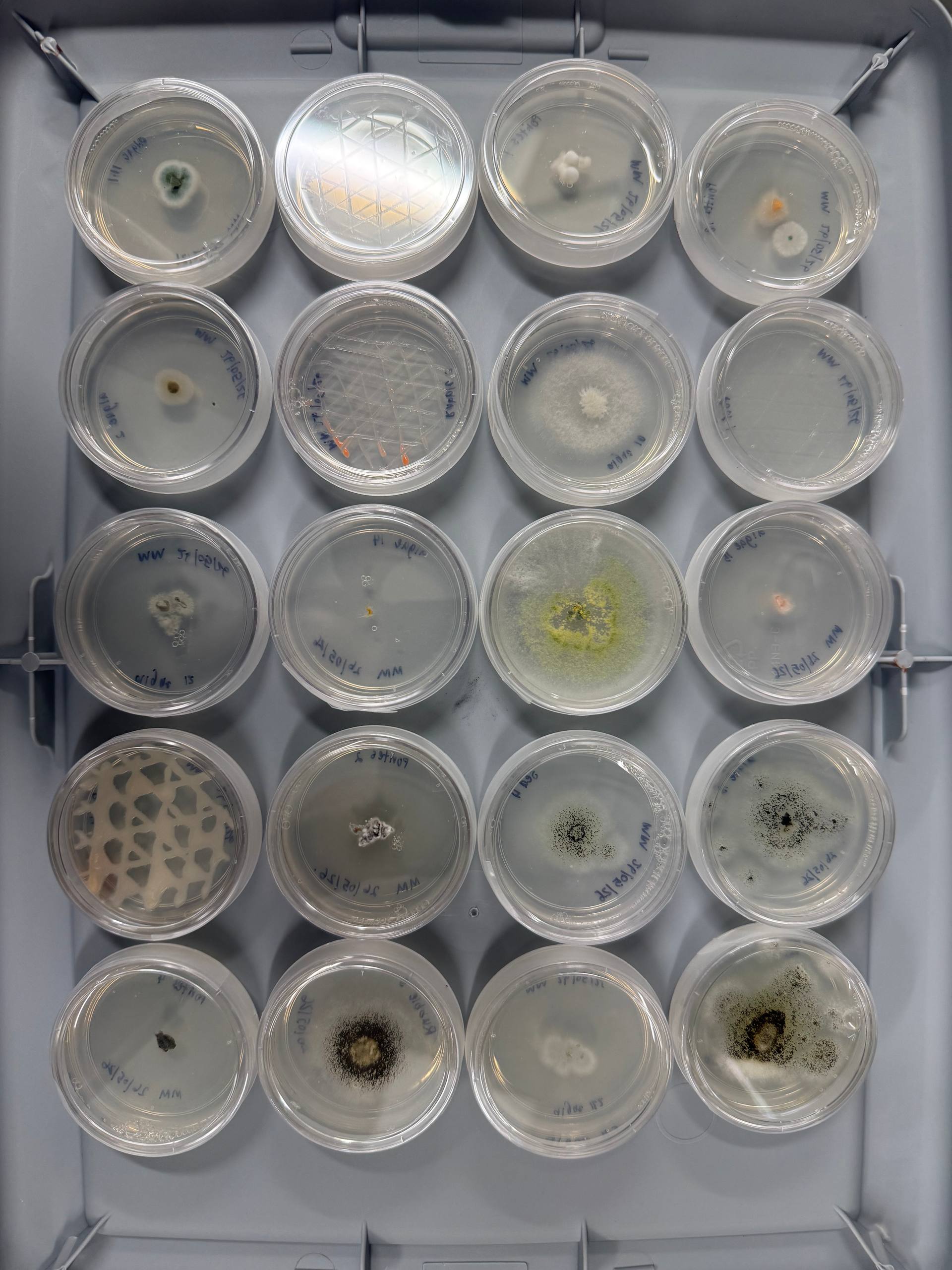
These findings suggest that fungi may play important roles in maintaining coral health and resilience, challenging the traditional focus on bacteria and algae in coral microbiome studies. By bringing attention to the coral mycobiome, Ming Sheng’s work contributes to a more comprehensive understanding of coral biology and may help inform future conservation and reef management efforts.
Beyond presenting his research, ISME 20 offered Ming Sheng the opportunity to connect with researchers from around the world who share an interest in microbial ecology. Through discussions with scientists and experts in the field, he gained valuable feedback on his work and exchanged ideas that could shape future research directions.
“The conference was a valuable and rewarding experience,” he shared. “Presenting my work allowed me to engage directly with researchers in my field, receive constructive feedback, and discuss ideas that could strengthen and expand my research.”
In addition to scientific sessions, Ming Sheng participated in workshops covering analytical methods and emerging approaches in microbial ecology. Exposure to a diverse range of international research helped broaden his scientific perspective and provided insights into how researchers across institutions and countries tackle similar questions.
Reflecting on the experience, Ming Sheng noted that the conference strengthened both his research and professional development. The opportunity to present his work, build connections with fellow scientists, and learn from the global microbial ecology community boosted his confidence as a researcher and inspired new ideas for future collaborations and projects.
Photo Credits: Ng Ming Sheng