
Tracing the Hidden Connections Behind Tropical Forest Regeneration
How do tropical forests recover after decades of human disturbance? For PhD student Fung Tze Kwan, answering this question means investigating the complex relationships between trees, wildlife and the next generation of forest plants.
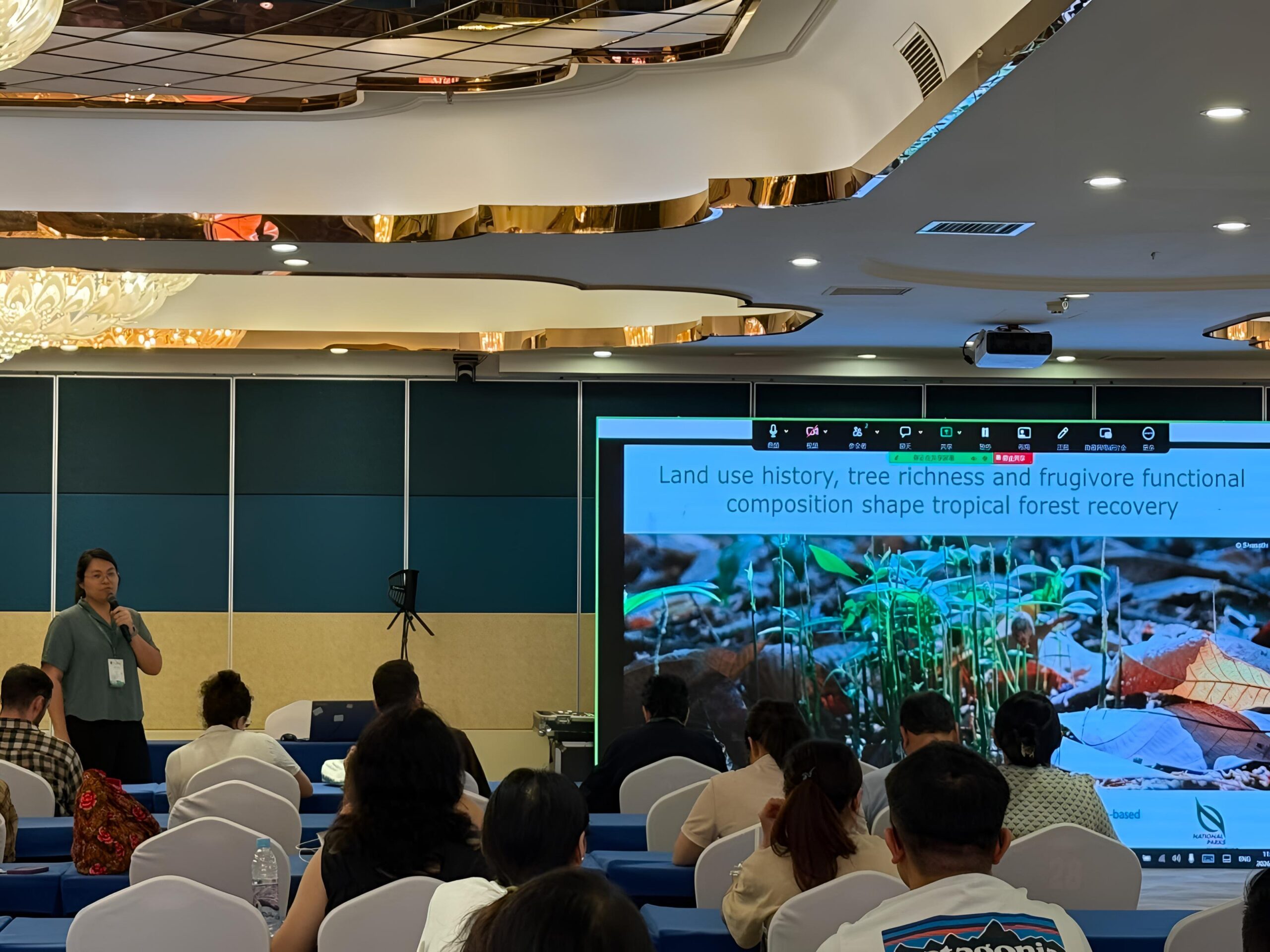
At the 62nd Annual Meeting of the Association for Tropical Biology and Conservation (ATBC 2026) in Xishuangbanna, China, Tze Kwan presented her research examining how land use history, tree diversity and frugivorous animals jointly influence tropical forest recovery. Conducted in collaboration with the NParks Tropical Forest Ecology Research Programme under the supervision of Professor Koh Lian Pin, her work focuses on the ecological processes that enable forests to regenerate naturally.
Drawing on data collected from 30 forest plots across Singapore, Tze Kwan investigated how historical land use continues to shape interactions between trees, seed-dispersing animals and seedling recruitment. Her findings reveal that the legacy of past disturbances can alter these ecological relationships long after forests begin recovering. Importantly, the study found that tree species richness and the functional composition of frugivores were more strongly linked to forest regeneration than the sheer number of frugivore species present. These insights underscore the importance of restoring key ecological functions, particularly seed dispersal, in forest restoration efforts.

Beyond presenting her research, Tze Kwan was selected to participate in the ATBC Field Botany Course at the Xishuangbanna Tropical Botanical Garden, where she received hands-on training in plant identification, herbarium preparation and botanical documentation. She also visited old-growth tropical rainforests in the region, gaining first-hand exposure to canopy research and long-term forest monitoring techniques.
Reflecting on the experience, Tze Kwan shared that engaging with researchers from around the world broadened her perspective on tropical forest ecology and opened new opportunities for collaboration. The conference not only strengthened her scientific network and technical skills but also reinforced her commitment to advancing research that supports biodiversity conservation and forest restoration in the tropics.

Photo credits: Fung Tze Kwan