
Can Cancer Cells Remember Treatment?
When patients with acute myeloid leukemia (AML) respond well to chemotherapy, most cancer cells are eliminated. Yet a small number can survive treatment and later contribute to disease relapse. Understanding how these cells persist is a major challenge in cancer research.
For Ankit Jana, a Year 4 PhD student under the supervision of Professor in Practice Greg Tucker-Kellogg, this question formed the basis of the research he presented at the Cancer Epigenetics Conference held from 13 – 16 October 2026 at Université Paris Cité, France.
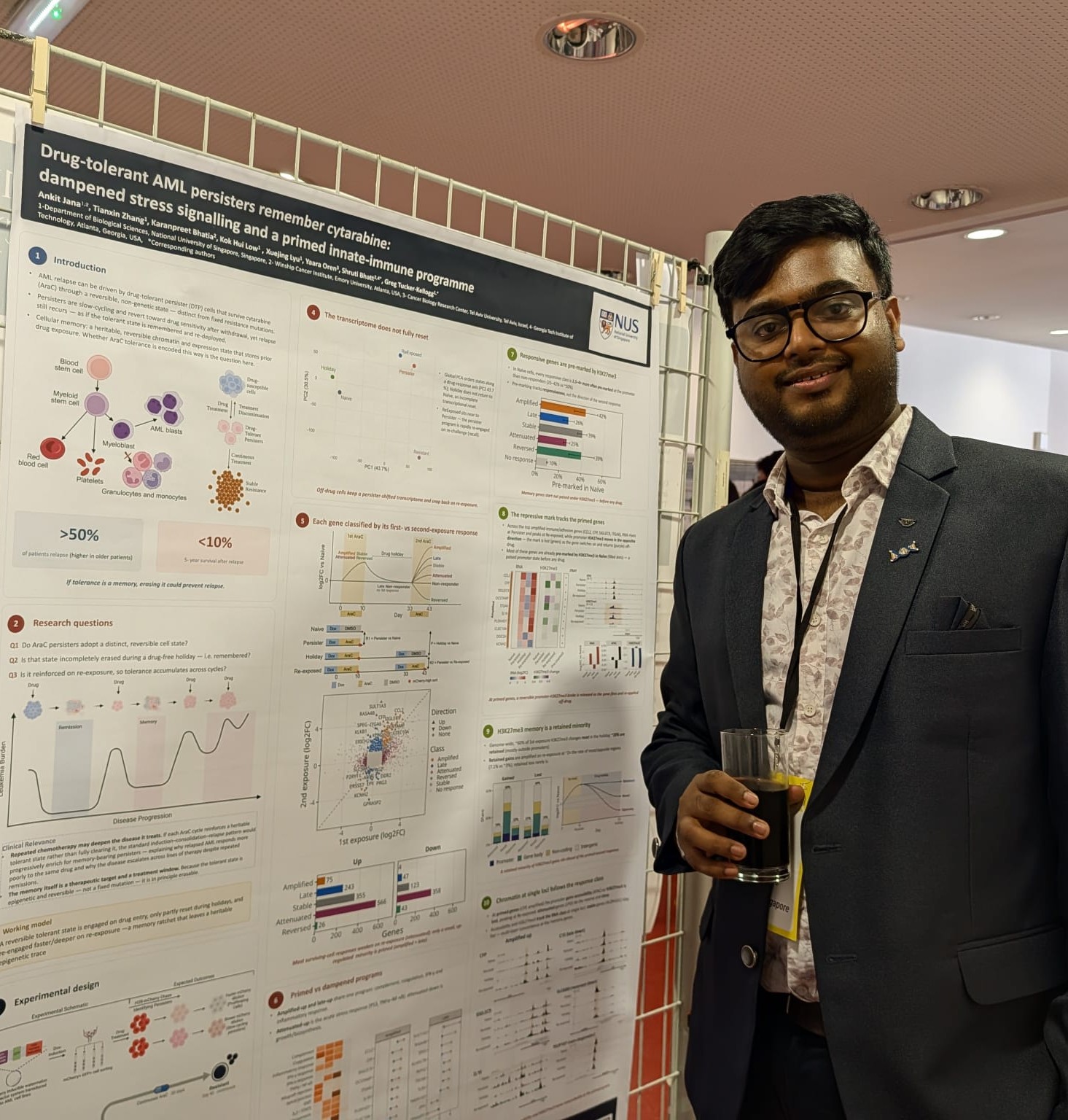
His work explores whether drug-tolerant leukemia cells can retain a form of “memory” after exposure to chemotherapy. Rather than becoming permanently resistant through genetic mutations, these surviving cells appear to alter how they respond when the same drug is administered again. His findings suggest that this memory is etched into the cells’ epigenetic landscape: when the drug returns, the cells do not simply repeat their earlier response but reshape it, in ways that may be reversible.
“The rare cells that persist through treatment are not simply resistant,” said Ankit. “They appear to retain a memory of the first exposure, responding differently when the drug returns.” Building on these insights, Ankit is now working to identify vulnerabilities in these persisting cells that could be targeted therapeutically, with the aim of preventing relapse. The project is carried out in collaboration with the Shruti Bhatt Lab at the Winship Cancer Institute, Emory University, and Yaara Oren’s lab at Tel Aviv University.
Research Recognised at an International Conference
Ankit presented his findings at the Cancer Epigenetics Conference, a specialist meeting that brings together researchers studying the role of epigenetic mechanisms in cancer development and treatment.
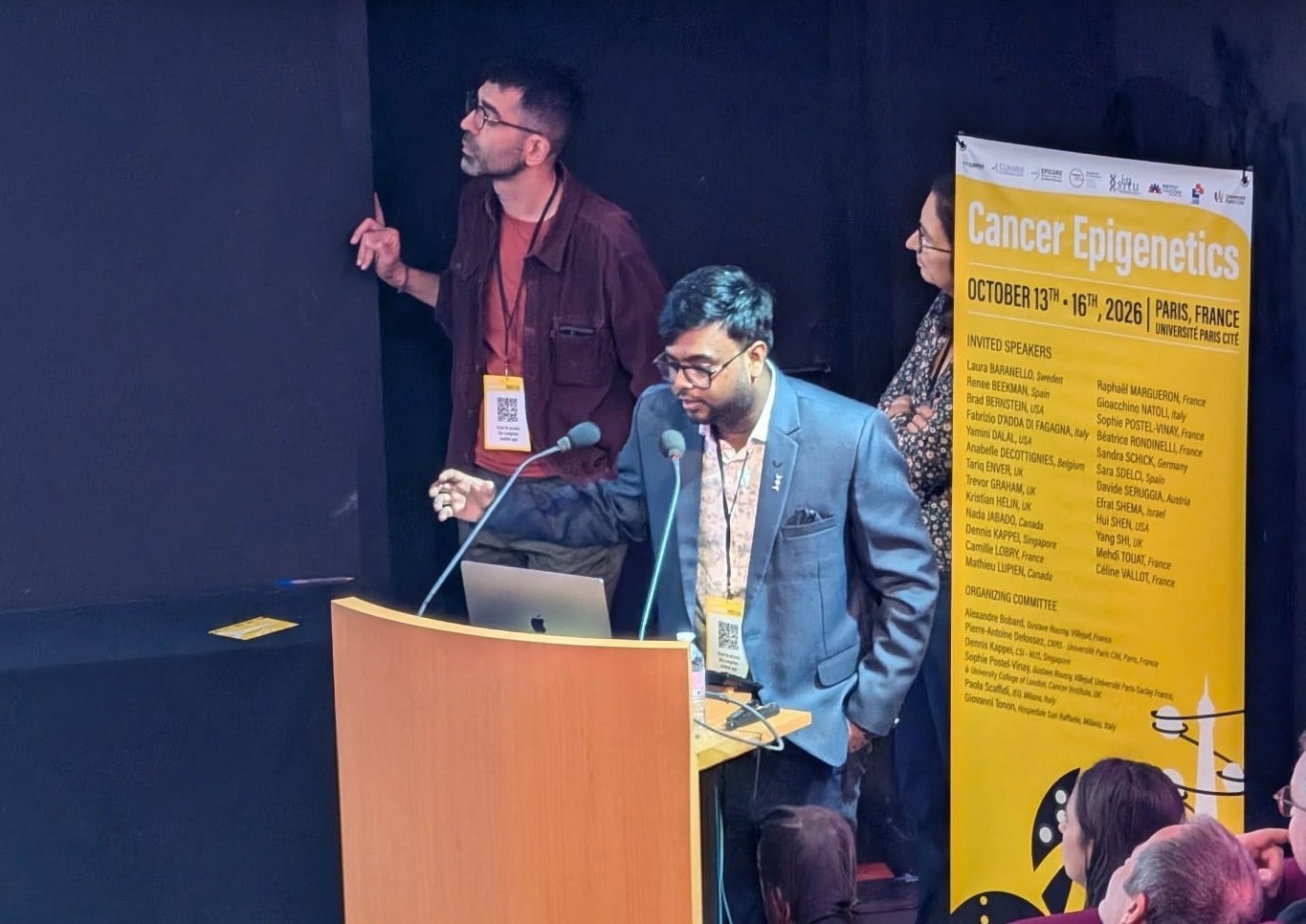
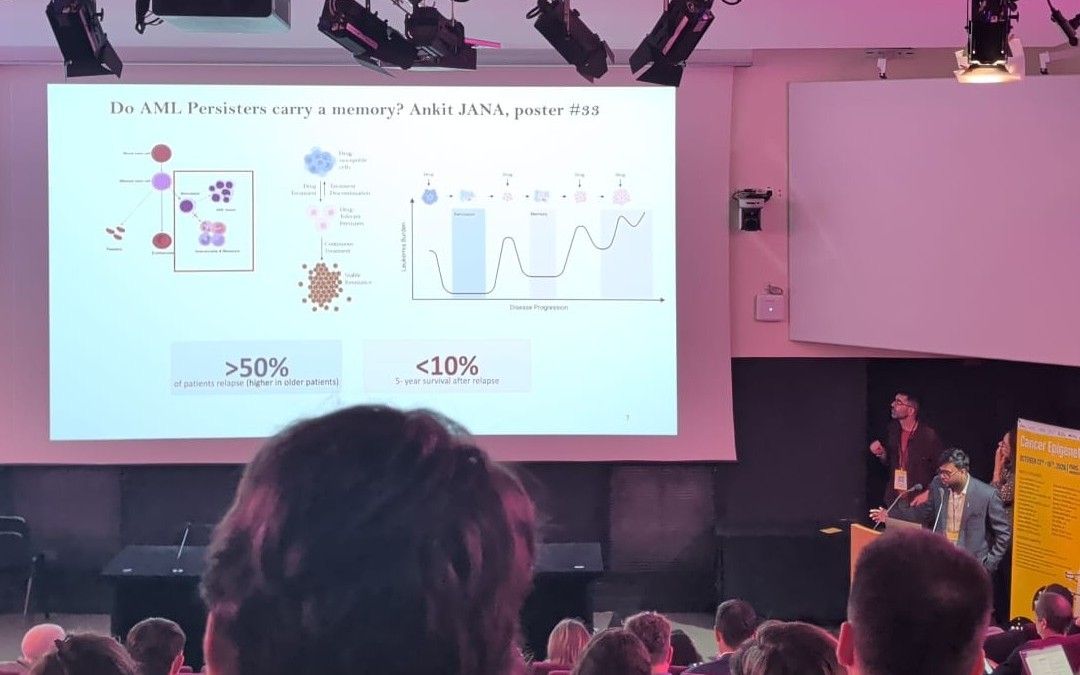
His poster was selected for a lightning talk, a distinction awarded to only a handful of presenters from approximately sixty poster submissions. The opportunity required him to present his research in a concise session before an audience of more than 400 conference participants.
Preparing the presentation became an important exercise in scientific communication for Ankit as he shares that, “Ninety seconds leaves no room for caveats, so I had to identify the single claim worth defending and trust the audience with the rest.”
Learning from Leaders in the Field
Beyond presenting his work, the conference provided valuable opportunities to engage directly with researchers studying cancer persistence and drug tolerance.
According to Ankit, the discussions following his lightning talk and poster presentation proved to be the most rewarding aspect of the experience. Senior researchers offered feedback, challenged assumptions, and suggested new directions that have already influenced how he is approaching the next phase of the project.
The experience also strengthened his ability to communicate complex ideas clearly and critically evaluate the evidence supporting his research.
Photo credits: Ankit Jana